

How Understanding Stress Can Help Elephants Thrive
- 13 May 2026
-
3
-
-


Elephants are often described as resilient. They endure droughts, travel vast distances, and adapt to changing landscapes. But resilience does not mean immunity. Like all complex, social animals, elephants experience stress. When stress becomes prolonged or unmanaged, it affects their health, behaviour, and long‑term well‑being.
What stress looks like in elephants
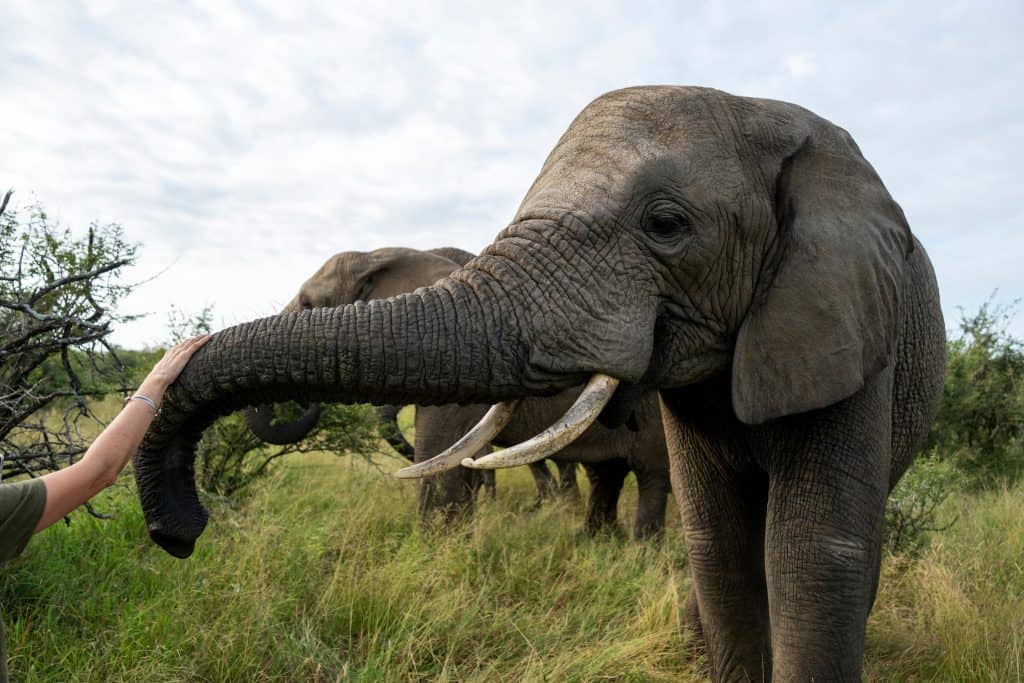
Stress in elephants does not always appear as dramatic aggression or obvious distress. More often, it shows itself quietly and can be easy to overlook unless behaviour is observed carefully and consistently over time.
At HERD, these potential indicators are identified through structured behavioural monitoring carried out by experienced elephant carers. Because the carers work closely with the herd every day, they are well placed to notice subtle changes in posture, movement, social interaction, and routine that might otherwise go unnoticed.
Importantly, these signs rarely result from a single event. Stress often builds gradually through cumulative pressures such as early‑life trauma, habitat disruption, social instability, or inconsistent human interactions.
This is why behaviour must always be interpreted in context. What may appear minor in isolation can signal deeper challenges when viewed as part of a longer‑term pattern.
The *in memory of* Limpopo Research Centre role in detecting stress
Behavioural observation is essential, but behaviour alone does not always tell the full story. Two elephants may look calm on the surface while experiencing very different levels of internal stress.
This is where the *in memory of* Limpopo Research Centre plays a critical role. The Limpopo Research Centre, is HERD’s plan for an on-site facility dedicated to ethical, non‑invasive elephant research.
Currently, HERD relies on the University of Pretoria, several hours’ drive away to analyse stress levels, but by doing them in-house, HERD will be able to monitor our elephants’ stress levels more quickly, more frequently, and more easily.
One of the most valuable tests that will be done is monitoring faecal glucocorticoid metabolites (fGCM). These glucocorticoids are hormones released when an animal experiences physiological stress. These hormones are broken down and excreted naturally in dung. Measuring these metabolites allows researchers to assess physiological stress levels without handling or disturbing the animal.
The most well‑known glucocorticoid is cortisol, and like in humans, these hormones are not inherently negative. They are essential for normal functioning. They mobilise energy, regulate immune responses, and support short‑term coping for the elephant. Under normal circumstances, fGCM levels become a concern not because they rise once, but because of how long and in what context they stay elevated. This means fGCM levels indicate concern when they show patterns consistent with chronic stress.
By consistently analysing hormone metabolites found in dung samples, HERD is able to support elephant care in practical, meaningful ways.
- It helps us understand what behaviour really means
Elephants can behave similarly in very different situations. fGCM monitoring helps us see whether a change in behaviour is linked to real physiological stress or whether an elephant is coping well. - It shows us patterns, not just moments
A single observation can be misleading. By tracking stress levels over time, fGCM helps us distinguish between short‑term reactions and ongoing strain. - It guides ethical, evidence‑based care decisions
When we adjust social groupings, habitat use, enrichment, or management practices, fGCM helps us evaluate whether those decisions are actually reducing stress. - It supports elephants with difficult pasts
Rescued and orphaned elephants often carry the effects of early trauma long after the event. fGCM monitoring helps caregivers understand how those experiences still influence stress responses, even years later, and adapt care to meet each elephant’s needs. - It gives a fuller picture of stress
Because fGCM reflects hormone activity over hours or days, it avoids reacting to brief, one‑off disturbances. Instead, it provides a more balanced view of how an elephant is coping overall.
Most importantly, fGCM helps us understand how elephants are feeling internally, even when they appear calm on the outside. It allows HERD to care not only for survival, but for long‑term well‑being.
By listening carefully and using tools like fGCM monitoring alongside daily observation, HERD is working towards a future where elephants are not only kept alive, but supported in living lives with dignity, agency, and long‑term well‑being.
The question is no longer only how we keep elephants alive.
It is how carefully we are willing to listen when they show us what they need.



Ann
I have been a HERD follower for many years and am now so very interested to hear of this valuable expansion of the care and research that has been continuous. We humans have traditionally treated animals with appalling cruelty and dismissiveness that it seems astonishing that they can nevertheless often treat us with respect and acceptance. Elephants are unique in many ways. To try to understand not only their physical make up and needs but also their psychology and inner feelings seems to be a major step forward in redressing our previous ignorance and neglect.